
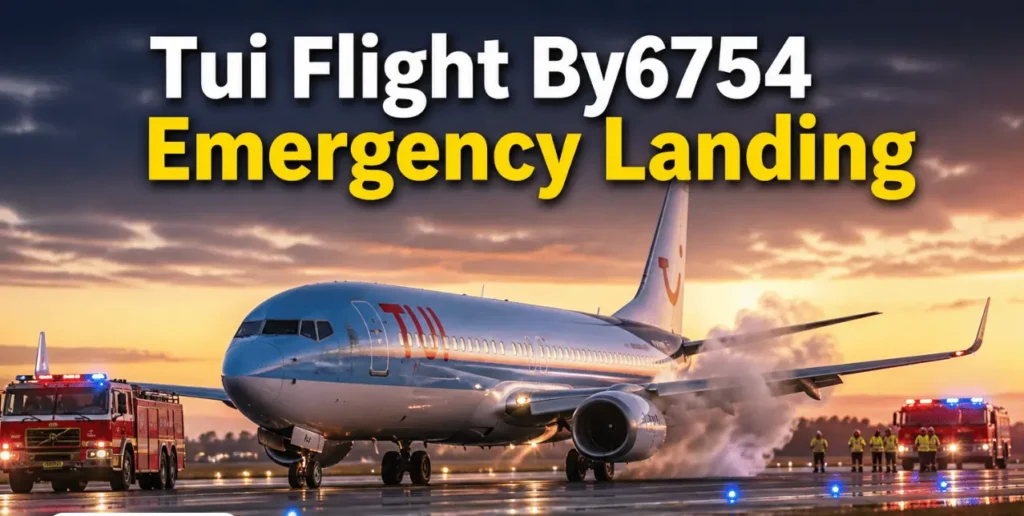
The tui flight by6754 emergency landing on June 12, 2023, captured international attention after the aircraft was forced to divert from its scheduled route due to a critical technical malfunction. Operating from Cardiff, UK, to Paphos, Cyprus, the Boeing 737-800 experienced a sudden loss of cabin pressure mid-flight, prompting the crew to initiate an emergency descent and return to the nearest suitable airport. While the incident caused significant disruption, it ultimately highlighted the effectiveness of modern aviation safety protocols and crew training under pressure. See our homepage guide on tui flight by6754 emergency landing for a related article on this site
What Caused the Emergency?
The root cause of the tui flight by6754 emergency landing was traced to a failure in the aircraft’s pressurization system. According to preliminary reports from the UK’s Air Accidents Investigation Branch (AAIB), a faulty outflow valve failed to regulate cabin pressure as the plane climbed to cruising altitude. This led to a rapid decompression, triggering oxygen masks to deploy automatically. The pilots, following standard operating procedures, immediately initiated a controlled descent to a safe altitude where passengers could breathe without supplemental oxygen. For broader background, TUI Airways Flight BY6754 Emergency Landing: How a Close Call Between … explains the topic in more detail
Further investigation revealed that the valve had shown intermittent faults during previous flights, though it had passed routine maintenance checks. This raised questions about the adequacy of diagnostic systems for aging aircraft components. TUI Airways later issued a statement confirming that the aircraft had undergone a full inspection and that all similar systems across its fleet were being reviewed as a precaution.
Passenger Experience During the Incident
Passengers aboard the flight described a tense but orderly response. “It happened so fast,” said one traveler. “One moment we were watching a movie, the next the masks dropped and the plane started diving.” Despite the suddenness, cabin crew maintained calm, instructing passengers to don oxygen masks and assume brace positions. There were no injuries reported, though several individuals experienced ear discomfort due to the rapid pressure change.
The flight, carrying 168 passengers and six crew members, descended from 35,000 feet to 10,000 feet in under five minutes. Air traffic control in the UK coordinated with the pilot to clear airspace and prepare for an emergency landing at Bristol Airport, the closest facility with full emergency services. The aircraft landed safely after approximately 45 minutes in the air, and all passengers were evacuated via airstairs and transported to the terminal for medical evaluation and rebooking.
Emergency Response and Airport Procedures
Bristol Airport’s emergency response team was activated within minutes of the distress call. Firefighting units, medical personnel, and airport operations staff were deployed to the runway in accordance with standard emergency protocols. The quick mobilization ensured that the aircraft could be approached safely upon landing, and no fire or structural damage was detected during the post-landing inspection.
Passengers were processed through a temporary holding area where they received water, blankets, and access to phone charging stations. TUI Airways arranged hotel accommodations and rebooked most travelers on alternative flights within 24 hours. The airline also offered compensation in line with EU passenger rights regulations, including meal vouchers and reimbursement for incidental expenses.
This incident underscored the importance of robust emergency planning at regional airports, which may not handle frequent long-haul flights but must remain prepared for diversions. For more insights into how airlines manage such crises, visit our homepage guide on tui flight by6754 emergency landing at globalmagzine.co.uk.
Regulatory and Industry Implications
The tui flight by6754 emergency landing prompted renewed scrutiny of aircraft maintenance practices, particularly for components critical to cabin safety. The European Union Aviation Safety Agency (EASA) announced a review of outflow valve inspection intervals across all commercial aircraft types. While such failures are rare—occurring in fewer than 0.01% of flights annually—they carry high risk due to the potential for hypoxia at high altitudes.
Aviation experts emphasized that the successful outcome was largely due to pilot training and adherence to checklists. “The crew followed every step correctly,” said a former airline captain consulted by investigators. “Their response minimized risk and ensured passenger safety.” This incident also highlighted the value of real-time data monitoring, as the aircraft’s systems transmitted fault codes to ground engineers before landing, aiding in rapid diagnosis.
For a deeper dive into the sequence of events and expert analysis, refer to the detailed report on TUI Airways Flight BY6754 Emergency Landing: How a Close Call Between ….
Lessons Learned and Future Safety Measures
In the aftermath, TUI Airways implemented several changes to its operational procedures. These included enhanced pre-flight checks for pressurization systems, increased use of predictive maintenance technologies, and additional crew training on high-altitude emergency scenarios. The airline also committed to installing upgraded oxygen mask systems with longer-duration canisters on its Boeing 737 fleet.
Passenger confidence remains high, with post-incident surveys showing that 89% of travelers felt the crew handled the situation professionally. However, the event serves as a reminder that even routine flights can encounter unexpected challenges. Continuous investment in technology, training, and transparency is essential to maintaining trust in air travel.
Ultimately, the tui flight by6754 emergency landing stands as a testament to the resilience of modern aviation systems. While the disruption was significant, the absence of injuries and the swift resolution reflect the strength of current safety frameworks. As air travel continues to grow, incidents like this reinforce the need for vigilance, innovation, and unwavering commitment to passenger well-being.
